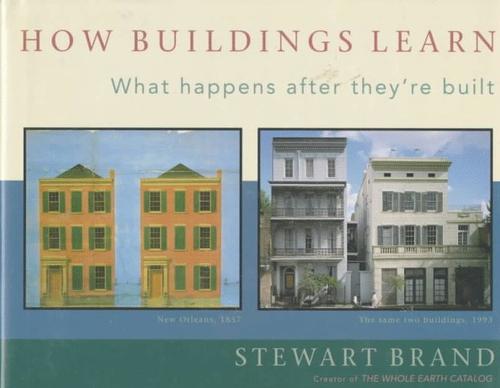
How Buildings Learn
Stewart Brand
Discover how architecture evolves long after the blueprints are finished by exploring the "shearing layers" that allow structures to adapt over decades. You will learn to view buildings as fluid, living systems rather than static monuments, gaining the essential insights needed to design spaces that thrive through change and stand the test of time.
The Temporal Illusion of Architecture
Explores how traditional architecture views buildings as static monuments, contrasting this with the reality of buildings as living, changing organisms over decades.
Buildings as Predictions vs. Flow
The Photography Trap
Shearing Layers: The Pace of Change
Introduces the book's core framework: buildings are composed of layers that change at different speeds, from site to stuff.
The Six Shearing Layers
The Conflict of Different Speeds
Designing for Disentanglement
The Low Road: Adaptive Vitality
Examines 'Low Road' buildings—cheap, adaptable structures like warehouses that foster creativity and long-term utility.
The Power of Cheap Space
Temporary Buildings that Last
The Garage and the Loft
The High Road: Enduring Intent
Investigates buildings designed for longevity, high maintenance, and institutional continuity.
Stately Durability
The Danger of Monumentality
Preservation as Growth
Vernacular vs. Professional Design
Contrasts the evolutionary 'Vernacular' way of building with the ego-driven 'Professional' architectural approach.
The Wisdom of Vernacular
The Professional's Blind Spot
Domestic Evolution
Learning from Failure and Feedback
Discusses why the building industry fails to learn from its mistakes and how to fix the feedback loop.
The Feedback Gap
Maintenance as Learning
Institutional Memory
Adaptive Design Strategies
Practical methods for designing buildings that are prepared for an uncertain future.
Scenario Buffering
The Strategy of the 'Unfinished'
Architecture as a Service
Start reading with AI
Interactive Socratic dialogue, level by level