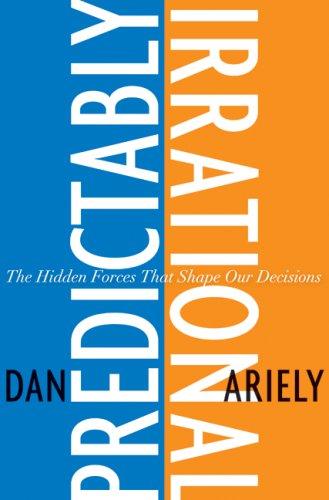
Predictably Irrational
Dan Ariely
Explore the hidden psychological patterns that cause us to make consistently illogical choices, from overspending on "free" items to misjudging our own self-control. By mastering these predictable biases, you will gain the clarity needed to outsmart your impulses and make more intentional, smarter decisions in every area of your life.
The Art of Comparison
This chapter explores how humans lack an internal value meter and instead rely on relative comparisons to make decisions, often leading to predictable errors in judgment.
The Decoy Effect
Arbitrary Coherence
The Hidden Cost of Value
Investigating how 'Free' and 'Social Norms' alter the landscape of human decision-making, moving us away from traditional economic logic.
The Magic of Zero Price
Social vs. Market Norms
The High Price of Gifts
The Heat of Passion
Analyzing how emotional states and biological impulses override rational long-term goals, leading to procrastination and poor self-control.
The Jekyll and Hyde Effect
Solving Procrastination
The Cost of Indecision
The Ownership Trap
Exploring why we overvalue what we own and how the psychological attachment to possessions skews our perception of reality.
The Endowment Effect
The IKEA Effect
The Trial Trap
Mind Over Reality
How our expectations, prices, and beliefs physically and psychologically change the way we experience the world.
The Power of Expectations
The Placebo Effect
Price and Efficacy
The Fragility of Honesty
A deep dive into why people cheat, how they justify it, and the surprising factors that keep us honest.
The Fudge Factor
The Honor Code
Token Dishonesty
A New Economic Perspective
Concluding the journey by comparing behavioral economics with standard economics and finding the 'Free Lunches' in policy and life.
Standard vs. Behavioral Economics
The Behavioral Free Lunch
Start reading with AI
Interactive Socratic dialogue, level by level