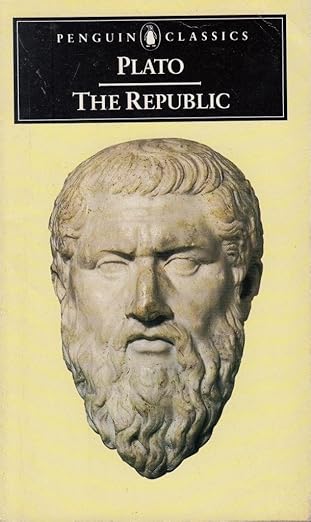
The Republic
Plato
Step into the foundational dialogue of Western thought to explore how the pursuit of absolute justice can reshape both the individual soul and the structure of society. By deconstructing the illusions of the "Cave," you will learn to look beyond societal shadows and cultivate the philosophical clarity necessary to lead a life of purpose, reason, and civic virtue.
The First Inquiry: Challenging Traditions
Socrates examines traditional and cynical definitions of justice through dialogue with Cephalus, Polemarchus, and Thrasymachus.
Justice as Repayment and Ritual
Helping Friends and Harming Enemies
The Sophist's Challenge: Might Makes Right
The City-Soul Analogy
Glaucon and Adeimantus challenge Socrates to prove justice is good for its own sake, leading to the creation of an 'Ideal City'.
The Ring of Gyges: Why Be Moral?
The Healthy and the Feverish City
The Noble Lie and Early Education
The Anatomy of Justice
Locating the four virtues within the state and mapping them to the three parts of the human soul.
The Four Cardinal Virtues
The Tripartite Soul
Inner Harmony as Health
The Paradox of the Philosopher-King
Exploring radical social structures and the necessity of linking political power with philosophical wisdom.
The Equality of Women and Guardians
The Rule of Wisdom
Knowledge vs. Opinion
The Ascent to Reality
The metaphysical core of the book, featuring the Sun, the Divided Line, and the Allegory of the Cave.
The Sun and the Form of the Good
The Divided Line
The Allegory of the Cave
The Decay of the Soul and State
A psychological and political study of how regimes degenerate from Aristocracy to Tyranny.
From Aristocracy to Oligarchy
The Chaos of Democracy
The Tyrant's Misery
Art, Immortality, and the Final Choice
The rejection of imitative art and the ultimate justification of justice through the Myth of Er.
The Critique of Mimesis
The Immortality of the Soul
The Myth of Er
Start reading with AI
Interactive Socratic dialogue, level by level